Small bakeries need proofing equipment that keeps dough organized, protected, and consistent without consuming valuable workspace. The right box can simplify batch handling for sourdough, pizza, and enriched doughs while making refrigeration and transport easier.
We’ve assembled 10 bread proofing boxes for small bakeries, ranging from compact lidded containers to foldable proofing systems with active temperature control. Use the guide below to compare capacity, stackability, temperature management, and everyday practicality before choosing.
Best 10 Bread Proofing Boxes for Small Bakeries Picks for 2026
Commercial Stackers
2-Tray Pizza Dough Proofing Box
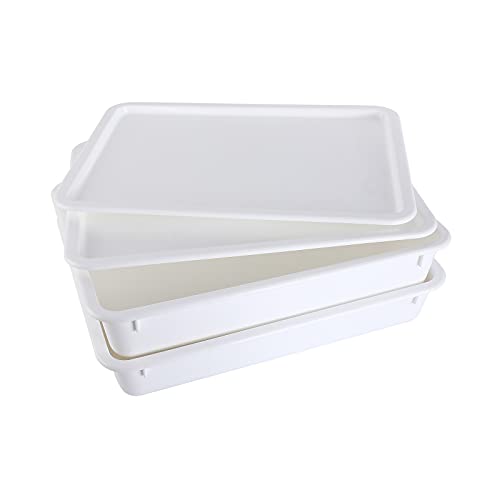
- Two covered commercial-grade trays
- BPA-free food-grade plastic
- Stackable for space-efficient storage
Best For: Small bakeries and pizzerias proofing pizza dough in batches
Clear Fermentation Set
2-Pack 6QT Sourdough Containers

- Two clear 6-quart containers
- Fitted lids help retain moisture
- Stackable and dishwasher safe
Best For: Sourdough and dough fermentation with easy visual monitoring
High-Capacity Batch Set
3-Pack 13L Dough Proofing Boxes

- Three large covered proofing boxes
- Up to 6,000 grams per box
- Stackable with vented lids
Best For: Multiple bread or pizza dough batches in compact commercial kitchens
Controlled Fermentation
Folding Temperature-Controlled Proofer
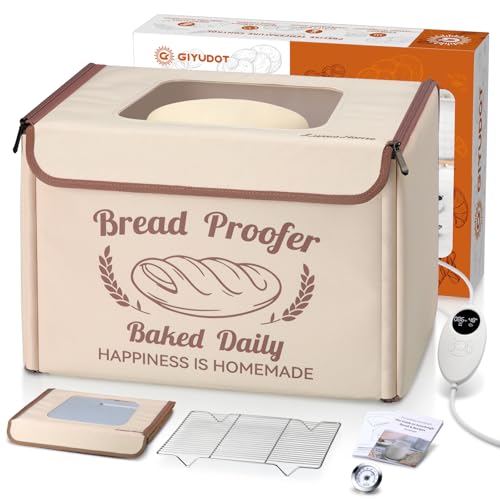
- 50–113°F temperature range
- 48-hour timer with three heating zones
- Folding 36-liter design with rack
Best For: Consistent proofing in cold or variable bakery environments
Best Flexible Batch Option
Vababa 16 L Dough Proofing Boxes

- Two 16-liter boxes for batches of about 4–6 dough balls each
- Clear BPA-free plastic for quick visibility
- Clip-on water-resistant lids and refrigerator-friendly sizing
Best For: Small bakery kitchens needing simple covered dough storage
Best for Everyday Use
Advanced Warm-Air Dough Proofer

- Active warm-air circulation supports more even proofing
- 68–122°F control, humidity monitoring, and an 8-hour timer
- Folds flat and includes a viewing window and metal rack
Best For: Sourdough-focused bakeries seeking repeatable fermentation
Best Easy-Clean Container Set
Vtopmart Pizza Dough Proofing Boxes

- Two stackable trays with secure snap-on lids
- Dishwasher-safe BPA-free food-grade plastic
- Fridge-, freezer-, and room-temperature storage compatible
Best For: Small bakeries prioritizing simple cleanup and organized storage
Best All-in-One Dough Tub
Brod & Taylor 6L Proofing Containers

- Two 6L containers hold up to 3,000g of dough each
- Volume markings make fermentation easy to monitor
- Dishwasher-safe and freezer-friendly
Best For: Bulk fermentation, folding, and refrigerated dough storage
Best Three-Pack Value
Large Stackable Pizza Dough Proofing Boxes

- Three food-grade, BPA-free boxes with lids
- Large size leaves room for dough expansion
- Stackable for organized storage
Best For: Multiple dough batches and versatile food storage
Best for Pizza Workflow
Commercial Six-Ball Proofing Box

- Holds up to six pizza dough balls
- Stacks with or without the lid
- Includes labels and two erasable markers
Best For: Organized pizza and portioned-dough production
Commercial Stackers – 2-Tray Pizza Dough Proofing Box
Pizza Dough Proofing Box, Commercial Grade 17.25" x 13", 2 Trays and Covers | Stackable
Check Price On AmazonFor small bakeries seeking straightforward bread proofing boxes for small bakeries, this commercial-grade rectangular set offers two covered trays for dough resting, stacking, and storage. Its food-grade, BPA-free plastic construction is sized for pizza and bread workflows.
Best For: Small bakeries and pizzerias that want durable, stackable proofing trays for pizza dough.
Pros:
- Includes two 17.25-by-13-inch trays with covers.
- BPA-free, food-grade plastic construction.
- Stackable design saves storage space when covers are removed.
- Snap closures help keep covers in place.
Cons:
- Hand wash only.
- Designed around pizza use rather than temperature-controlled proofing.
This is a practical choice when your priority is batch organization and efficient storage rather than active temperature management. The sturdy covered trays should fit well into a busy small-bakery prep routine.
Clear Fermentation Set – 2-Pack 6QT Sourdough Containers
These clear 6-quart containers are a flexible option among bread proofing boxes for small bakeries, especially for teams tracking sourdough fermentation. Their transparent walls, volume markings, fitted lids, and stackable profile support organized countertop or refrigerator workflows.
Best For: Small baking operations handling sourdough, bread, and pizza dough with visible fermentation monitoring.
Pros:
- Two 6-quart containers provide a 12-quart total set capacity.
- Clear walls and side markings make dough expansion easier to monitor.
- Fitted lids help reduce surface drying during fermentation.
- Dishwasher-safe polypropylene construction is reusable and easy to clean.
Cons:
- Each container has a relatively low-profile 3.9-inch height.
- Does not provide active temperature control.
For bakeries that rely on visual cues and flexible cold-proofing space, this set combines useful capacity with a compact footprint. It is best suited to fermentation workflows where clear monitoring matters more than heated proofing.
High-Capacity Batch Set – 3-Pack 13L Dough Proofing Boxes
For higher-volume bread proofing boxes for small bakeries, this three-pack supplies roomy 17.3-by-12.8-inch containers with lids. The stackable, food-safe boxes are designed for bread and pizza dough, while their vented lids help manage moisture and escaping gases.
Best For: Small commercial kitchens needing multiple large containers for dough batches and general food storage.
Pros:
- Three boxes support multiple dough batches at once.
- 13-liter capacity is rated for up to 6,000 grams of dough per box.
- Stackable construction helps maximize kitchen space.
- Vented lids help retain moisture while allowing gases to escape.
Cons:
- Hand wash only.
- The product notes contain differing capacity references, so buyers should confirm the exact specification.
- No active temperature-control system is included.
This set stands out for batch capacity and quantity. It can simplify staging in a small bakery, particularly when several dough portions need covered resting space at the same time.
Controlled Fermentation – Folding Temperature-Controlled Proofer
Unlike simple bread proofing boxes for small bakeries, this folding electric proofer actively manages fermentation conditions. It offers adjustable 50–113°F temperature control, a 48-hour timer, three heating zones, insulation, and a viewing window for monitoring multiple dough batches.
Best For: Small bakeries that need more consistent proofing through cold seasons or variable room temperatures.
Pros:
- Adjustable 50–113°F range and timer settings up to 48 hours.
- Three heating zones and an NTC sensor support even, stable warming.
- Foldable design helps reduce storage demands.
- Includes a stainless steel rack, humidor, manual, and recipes.
Cons:
- Requires electrical power and occupies more setup space than passive trays.
- Temperature-controlled functionality adds complexity compared with basic boxes.
- Only one shelf is included.
This is the most feature-rich option in the group for bakeries where repeatable fermentation is a priority. Its 36-liter capacity and folding construction balance production support with storage convenience.
Best Flexible Batch Option – Vababa 16 L Dough Proofing Boxes
For small bakeries comparing bread proofing boxes for small bakeries, the Vababa two-pack offers a simple, space-conscious way to proof multiple dough balls. Each 16-liter box can hold approximately four to six dough balls and is sized to fit most household refrigerator shelves.
Best For: Small bakery kitchens needing straightforward refrigerated proofing and flexible food storage.
Pros:
- Two 16-liter boxes provide useful batch capacity.
- Transparent BPA-free plastic makes dough easy to monitor.
- Clip-on, water-resistant lids help contain moisture.
- Also works for marinating, produce, and snack storage.
Cons:
- The boxes do not provide active temperature or humidity control.
- Each box has one compartment, so dough balls are not individually divided.
The Vababa set is a practical choice when your bakery already has a suitable proofing environment and mainly needs covered containers for dough batches. Its two-box format is especially useful for organizing separate mixes or stages of fermentation.
Best for Everyday Use – Advanced Warm-Air Dough Proofer
For bakeries that need more repeatable fermentation, this foldable proofer adds active warm-air circulation, adjustable temperature, and a humidity monitor. Its 68–122°F range and timer support longer sourdough fermentation as well as bread and pizza dough proofing.
Best For: Small bakeries focused on sourdough consistency and controlled bulk fermentation or final proofing.
Pros:
- Active circulation helps reduce hot and cool spots.
- Temperature control spans 68–122°F with an up-to-8-hour timer.
- Display shows interior temperature, humidity, and remaining time.
- Folds to approximately 16.5 × 13.0 × 3.9 inches for storage.
Cons:
- It cannot cool below the surrounding indoor temperature.
- At 3.6 pounds, it is less lightweight than a basic plastic proofing box.
- Active controls and powered heating add complexity compared with passive containers.
This is the most feature-rich option for a small bakery where fermentation control matters more than simple refrigerated storage. The viewing window, built-in controls, insulation, and fold-flat design make it well suited to repeatable sourdough workflows in a limited workspace.
Best Easy-Clean Container Set – Vtopmart Pizza Dough Proofing Boxes
The Vtopmart two-piece set is a practical contender among bread proofing boxes for small bakeries, especially when fridge storage and cleanup are priorities. Each box measures 14.96 × 10.43 × 5.31 inches and is designed to hold four to six dough balls without excessive height pressure.
Best For: Small bakeries wanting stackable, dishwasher-safe containers for refrigerated dough and ingredient storage.
Pros:
- Two trays and two snap-on covers support batch organization.
- Increased internal height helps prevent fermented dough from being squashed.
- BPA-free food-grade material is suitable for fridge, freezer, and room-temperature use.
- Smooth interiors are dishwasher-safe for easier cleanup.
Cons:
- The boxes do not actively regulate proofing temperature or humidity.
- The listed 10.15-quart capacity is smaller than the Vababa set’s 16-liter capacity per box.
Choose Vtopmart when a bakery needs dependable covered containers rather than an electric proofing chamber. Snap-on latches, stackability, and dishwasher compatibility make this set convenient for everyday dough handling and broader kitchen storage.
Best All-in-One Dough Tub – Brod & Taylor 6L Proofing Containers
For small bakeries seeking bread proofing boxes for small bakeries, this two-pack combines generous capacity with easy dough monitoring. Each 6-liter container holds up to 3,000 grams of dough, while translucent walls and volume markings help you judge fermentation without lifting the lid.
Best For: Small bakeries and serious home bakers that want stackable containers for mixing, folding, fermenting, and refrigerating dough.
Pros:
- Two 6-liter containers accommodate up to 3,000 grams of dough each.
- Translucent walls and volume markings make dough growth easy to track.
- Sealing lids help retain humidity and prevent a dry dough skin.
- Dishwasher-safe, freezer-friendly polypropylene is designed for repeated use.
Cons:
- The rectangular tubs may take more shelf space than smaller dough-ball boxes.
- The set is supplied in only two containers, which may limit larger batch workflows.
This is a particularly flexible option when your process includes stretch-and-folds or bulk fermentation, rather than only individual pizza dough balls. Its markings and wide base make it easy to manage dough consistently across batches.
Best Three-Pack Value – Large Stackable Pizza Dough Proofing Boxes
This three-pack is a practical choice for small bakeries comparing bread proofing boxes for small bakeries by batch capacity and storage efficiency. The large, lidded plastic boxes are designed to stack while keeping proofed dough from touching the covers.
Best For: Bakeries and pizza operations that need three generously sized containers for multiple dough batches or general food storage.
Pros:
- Includes three food-grade, BPA-free containers with lids.
- Large 17.32-by-12.63-by-4.56-inch footprint provides room for proofed dough.
- Stackable design helps organize refrigerator or prep-station space.
- Can also be used for fruits, vegetables, snacks, meats, and other foods.
Cons:
- The large footprint requires substantial storage space.
- The supplied details do not include volume markings for tracking dough rise.
- Plastic construction is described as sturdy but lacks a stated dishwasher-safe care instruction.
Choose this set when quantity and usable surface area matter more than specialized fermentation features. It offers straightforward covered storage for several batches, though you will need to estimate rise visually.
Best for Pizza Workflow – Commercial Six-Ball Proofing Box
For small bakeries that portion pizza dough, this commercial-style box is one of the more workflow-focused bread proofing boxes for small bakeries. Its 12-liter capacity holds up to six dough balls, and the included label sticker and erasable markers support batch tracking.
Best For: Pizzerias, bakeries, and food-service kitchens proofing individual pizza or bread dough portions in organized batches.
Pros:
- Accommodates up to six pizza dough balls in a 12-liter container.
- Food-grade, BPA-free polypropylene is stain resistant and built for repeated use.
- Stacks with or without the lid to help maximize prep and refrigerator space.
- Label sticker and two erasable markers support date and batch identification.
Cons:
- The non-airtight lid may not suit bakers seeking maximum moisture retention.
- This is a single-container set rather than a multi-box pack.
- Its portioned-dough layout is less suited to very large bulk dough masses.
The intentionally non-airtight lid allows slight airflow and may help reduce excess condensation during fermentation. For a small pizza-focused operation, the portion capacity and FIFO labeling features make daily dough handling more systematic.
How We Picked These Bread Proofing Boxes for Small Bakeries
We focused on features that matter in a small commercial baking operation: usable capacity, food-safe construction, secure lids, stackability, cleaning convenience, and compatibility with common dough workflows. We also considered whether each option suits individual dough balls, bulk fermentation, or larger batches. Temperature-controlled models were evaluated for bakeries that need more consistent proofing conditions, while basic containers were included for reliable, lower-cost organization.
Because product specifications and included accessories can vary, confirm dimensions, capacity, temperature range, and care instructions before ordering. A box that fits your dough quantity but not your racks, refrigerator, or worktable may create more problems than it solves.
Quick Comparison
| Type | Best For | Main Advantage | Potential Limitation |
|---|---|---|---|
| Single commercial-style box | Small pizza or bread batches | Simple handling and easy stacking | Limited capacity per container |
| Multi-pack containers | Separate dough portions | Flexible batch organization | Requires more storage space |
| Large bulk-fermentation boxes | Sourdough and high-hydration dough | More room for expansion | Can be cumbersome when full |
| Temperature-controlled proofer | Year-round consistency | Active warmth and timed proofing | Higher cost and more setup |
Key Buying Factors for Bread Proofing Boxes for Small Bakeries
Capacity and Footprint
Choose capacity based on dough weight, portion size, and how many batches you proof at once. Measure shelves, refrigerators, and transport racks before buying. Low-profile boxes are often easier to stack and slide into cold storage.
Lids, Seals, and Dough Protection
A secure lid helps prevent skin formation, contamination, and moisture loss. Latching lids can be useful during transport, while looser-fitting covers may make frequent access faster. Look for enough headroom for dough expansion.
Materials and Cleaning
Food-safe plastic is lightweight and practical for daily use. Smooth interiors and removable components reduce cleanup time. Avoid designs with deep grooves or inaccessible corners if the boxes will be used continuously.
Temperature Control
Most bakeries can manage ordinary proofing with ambient conditions and refrigeration. A heated, timed proofer is more useful when production depends on predictable fermentation despite seasonal temperature swings. Check its temperature range, timer limits, power requirements, and usable interior dimensions.
Workflow Compatibility
Consider whether staff will proof dough individually, in bulk, or on trays. Labels, markers, stackable shapes, and transparent walls can improve rotation and reduce handling errors. Boxes should fit your existing mixers, benches, racks, and delivery process.
Who Should Buy Which Bread Proofing Boxes for Small Bakeries?
Choose compact commercial-style containers if you make modest pizza or bread batches and need straightforward storage. Multi-packs are a practical choice for bakeries that portion dough into individual balls or run several formulas at once. Larger six- to sixteen-liter containers better suit bulk fermentation and growing sourdough batches.
If your bakery struggles with cold rooms, inconsistent seasonal temperatures, or strict production timing, consider a folding temperature-controlled proofing box. It offers more control but requires counter or storage space and access to power. For most small bakeries, the best choice is the model that matches your batch size and storage layout—not necessarily the largest or most feature-rich option.