The right can sealer can make homebrewed beer, kombucha, coffee drinks, juice, and other beverages easier to package and store. This roundup compares manual and electric models across different can materials, sizes, and workloads.
Whether you need a portable tool for occasional batches or a stronger machine for frequent beverage production, focus on compatibility, adjustment range, sealing consistency, and ease of operation before buying.
Best 10 Can Sealing Machines for Home Use Picks for 2026
Heavy-Duty Automatic Pick
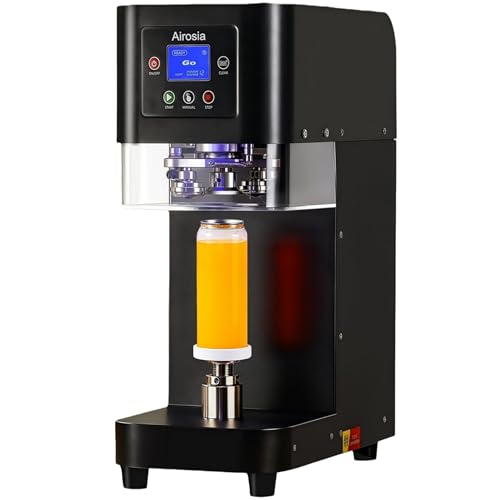
- Automatic 270W operation
- Five included cup holders
- Handles 2.4–6.7-inch can heights
Best For: High-volume beverage and food packaging
Portable Manual Pick

- No electricity required
- Three-roller sealing system
- Adjusts from 1.2–6.7 inches
Best For: Portable, low-to-moderate-volume sealing
Fast Manual Pick
Stainless Steel Rotary Can Sealer

- Up to 10 cans per minute
- Two height-specific bases
- Works with PET and aluminum cans
Best For: Fast manual sealing of compatible 55mm cans
Compact Electric Pick
Height-Adjustable Semi-Automatic Sealer

- 90W electric operation
- Compact 20-pound design
- Includes 330ml and 500ml holders
Best For: Home workspaces needing assisted sealing
Budget Manual Pick

- No electricity required
- Long handle for manual operation
- Compact ABS-and-iron construction
Best For: Occasional home kitchen sealing
Portable PET Pick

- Lightweight, cord-free operation
- Designed for 55 mm PET cans
- Supports two compatible lid styles
Best For: Small-batch home drinks and mobile service
Best Manual Countertop Pick

- Manual, no-electricity operation
- Cast iron body with steady rubberized leg
- Designed for 2-inch aluminum lids
Best For: Homebrew, kombucha, juice, and other small-batch drinks
Best Portable Option

- Compact handheld design
- No batteries or electricity required
- For 55mm plastic easy-open cans only
Best For: Portable home beverage prep and small batches
Best Adjustable Capacity

- Stainless-steel manual construction
- Adjustable for three listed can heights
- Mountable base for steadier operation
Best For: Repeated home or small-scale beverage sealing
Heavy-Duty Automatic Pick – 270W Commercial Can Sealer
For shoppers comparing can sealing machines for home use, this automatic model offers substantial power and a broad selection of included holders. Its 270W motor, adjustable height, and support for aluminum and plastic cans make it better suited to frequent beverage or food packaging than occasional light-duty sealing.
Best For: High-volume home businesses, food trucks, beverage shops, and users packaging craft beer, kombucha, coffee, juice, or desserts.
Pros:
- 270W motor and reinforced steel frame are designed for consistent, longer-term operation.
- Includes five holders for 250ml, 330ml, tall 330ml, 500ml, and 650ml containers.
- Automatic operation includes a power switch, start button, cup counter, and height adjustment.
- Supports can heights from 2.4 to 6.7 inches and is designed for #202 cans.
Cons:
- At about 87 pounds, it is not especially portable for a home countertop.
- Factory calibration may require raising the cup holder when using shorter PET cans.
- Light vibration can still occur during operation despite the reinforced frame.
This is the most production-oriented option in the group. Its included holders and automatic controls add convenience, but the large, heavy frame makes it a better fit for a dedicated workspace than a small kitchen.
Portable Manual Pick – Adjustable Hand Can Sealer
This manual option is a practical choice for can sealing machines for home use when you want to avoid electricity and keep the setup portable. Its hand crank, adjustable holder, and table-mounting holes suit small operations, markets, food trucks, and workspaces where simplicity matters.
Best For: Home users, farmers markets, food trucks, outdoor events, and bubble tea or coffee shops without convenient electrical access.
Pros:
- Requires no electricity and can be used wherever a stable work surface is available.
- Three-roller design is intended to provide smooth, even pressure for airtight sealing.
- Adjustable holder accommodates heights from 1.2 to 6.7 inches.
- Includes adapters for 11.2-ounce and 1.69-ounce containers.
Cons:
- Manual cranking requires about 15 turns per seal.
- It weighs approximately 20 pounds, so it is portable but still substantial.
- Screws for permanent table mounting are not included.
This sealer favors control and flexibility over speed. It is a strong fit for low- to moderate-volume users who value off-grid operation and do not mind doing the sealing by hand.
Fast Manual Pick – Stainless Steel Rotary Can Sealer
For shoppers seeking can sealing machines for home use with a straightforward mechanical design, this stainless steel rotary sealer is worth considering. It is rated for sealing up to 10 cans per minute and includes two bases for handling different container heights.
Best For: Home beverage makers, cafes, bars, restaurants, dessert shops, and other users working with 55mm PET or aluminum cans.
Pros:
- Manual rotary operation can reach speeds of up to 10 cans per minute.
- Stainless steel construction is described as corrosion-, rust-, and wear-resistant.
- Two included bases accommodate approximately 4.53-inch and 6.61-inch can heights.
- Designed for 55mm/2.17-inch-diameter PET and aluminum cans.
Cons:
- It only lists two supported can heights, limiting container flexibility.
- Manual operation requires repeated hand-crank use.
- The supplied notes do not specify an included electric or automatic mode.
This model balances a compact feature set with useful manual speed. It makes the most sense when your cans match the 55mm diameter and one of the included base heights.
Compact Electric Pick – Height-Adjustable Semi-Automatic Sealer
This compact electric model offers a middle ground for shoppers comparing can sealing machines for home use. It uses a 90W motor with a push-and-pull sealing process, while its adjustable base and included 330ml and 500ml holders support several common beverage formats.
Best For: Home brewers, juice and milk-tea makers, bubble tea shops, food trucks, bars, and other users who need electric assistance without a large commercial machine.
Pros:
- Compact, slim construction takes up less counter space than larger commercial units.
- Supports cans from 2.2 to 3.9 inches in diameter and 2.4 to 6.7 inches in height.
- Includes 330ml and 500ml holders for common drink sizes.
- Non-slip feet and a sturdy base are designed to improve stability.
Cons:
- It is semi-automatic, so the user must complete the seal with a push-and-pull motion.
- Proper force is required on both the push and pull strokes.
- An additional holder may be needed for cans under 4.5 inches to help prevent tipping.
This is a practical compromise between a fully manual sealer and a heavier automatic machine. Its smaller footprint suits home workspaces, but users should account for the required hand pressure and optional holder.
Budget Manual Pick – Hand-Operated Can Sealer
If you want a straightforward option among can sealing machines for home use, this manual sealer avoids cords and motors. Its long handle is designed for hand operation, while the compact ABS-and-iron construction suits occasional kitchen tasks.
Best For: Home kitchens that need a simple manual tool for sealing compatible cans, unfinished edible jars, or glass jars.
Pros:
- Manual operation requires no electricity.
- Long handle is intended to make hand sealing easier.
- Compact design is described as lightweight, easy to clean, and dishwasher-friendly.
- ABS and iron construction is designed for repeated use.
Cons:
- Manual operation is slower and more labor-intensive than an electric machine.
- The supplied details do not specify compatible can or lid dimensions.
This is a practical choice when low cost, portability, and occasional sealing matter more than speed. Confirm compatibility with your containers before ordering.
High-Volume Electric Pick – Automatic Drink Can Sealer
For buyers seeking can sealing machines for home use with faster throughput, this corded electric model uses a 370W motor and is rated to seal in about 4–6 seconds. Its adjustable design, LED display, and counting function make it more suitable for organized drink preparation than casual one-off sealing.
Best For: Home beverage businesses, food trucks, bars, or other users who need semi-automatic sealing for aluminum and plastic cans.
Pros:
- 370W motor is designed for 4–6-second sealing cycles.
- Works with both aluminum and plastic cans.
- LED display and intelligent counter help track sealed cans.
- Height-adjustable, semi-automatic design supports varied drink-service workflows.
Cons:
- At 49.6 pounds, it is substantially less portable than a manual sealer.
- Its 23.6-inch height and corded power requirement may be excessive for small kitchens.
- The supplied details do not list specific can-size compatibility.
This machine offers useful speed and tracking features, but its commercial-style size and weight make it best for a dedicated workspace or higher-volume home operation.
Portable PET Pick – 55 mm Manual Soda Can Sealer
This compact manual model is one of the more focused can sealing machines for home use, as it is designed specifically for PET beverage cans with a 55 mm mouth. It needs no electricity and uses a four-step roller process, making it convenient for small batches, home drinks, and mobile service.
Best For: Home drink preparation and small-batch service using compatible 55 mm PET cans and lids.
Pros:
- Portable 9.6-ounce design needs no cord or electricity.
- Designed for compatible 55 mm PET cans.
- Supports easy-open and full-open lid styles when properly matched.
- Works with listed 330 mL, 500 mL, and 650 mL PET cans sharing a 55 mm mouth.
Cons:
- Compatibility is limited to properly matched 55 mm cans and lids.
- Manual rotation requires steady hand pressure and edge inspection.
- It is intended for small-batch use rather than high-volume production.
Choose this sealer when portability and precise PET-can compatibility are more important than automation. Measure both the can opening and lid diameter before buying.
Best Manual Countertop Pick – Adjustable Home Can Sealer
For home users comparing can sealing machines for home use, this manual countertop model offers a straightforward way to seal 2-inch regular-mouth aluminum lids without electricity. Its adjustable design is suited to several beverage and small-batch kitchen applications.
Best For: Homebrew, craft beer, kombucha, juice, and coffee drinks in compatible aluminum-lid containers.
Pros:
- Manual operation requires no electricity and produces little noise or mess.
- Cast iron construction and a rubberized leg support steady countertop use.
- Adjustable height accommodates different container setups.
- Designed for 2-inch regular-mouth aluminum lids and listed for PET bottles and aluminum caps.
Cons:
- Requires hand-operated pressing, so it may be less convenient for very high-volume sealing.
- Compatibility should be confirmed with the specific lid, bottle, or can format before purchase.
This is a practical choice when you want a sturdy, non-electric sealer for occasional home beverage preparation. The adjustable format adds versatility, but matching the container and lid dimensions remains essential.
Best Portable Option – 55mm Handheld PET Can Sealer
If portability is your priority when shopping for can sealing machines for home use, this handheld tool is compact, manually operated, and designed for quick sealing of compatible plastic beverage cans. Its narrow 55mm specification makes checking container compatibility especially important.
Best For: Home kitchens, drink stations, DIY beverages, and small-batch use with 55mm plastic easy-open cans.
Pros:
- Compact handheld format is easy to store and transport.
- Works without batteries or an electrical supply.
- Reinforced sealing structure is intended for repeated use.
- Suitable for drinks such as juice, tea, coffee, and milk beverages when used with compatible cans.
Cons:
- Only compatible with 55mm plastic easy-open cans.
- Not compatible with aluminum soda cans or other sizes.
- Requires cleaning of the sealing area after use.
This sealer makes sense for users who value a small, portable tool and consistently use the specified PET can format. It is less suitable if you need flexibility across aluminum cans or multiple diameters.
Best Adjustable Capacity – 202 Can Sealing Machine
For shoppers seeking can sealing machines for home use with more capacity flexibility, this stainless-steel manual model supports standard 202 aluminum and PET cans and offers adjustable height. The fixed tabletop base is useful for steadier operation during repeated sealing.
Best For: Home beverage production and small-scale use with compatible 202 cans in 11oz, 16.9oz, or 22oz sizes.
Pros:
- Manual operation works without electricity and is suitable for use on the go.
- Stainless-steel construction is described as wear-resistant, rust-proof, and sturdy.
- Adjustable height accommodates different can heights.
- Pre-drilled base holes allow tabletop mounting for reduced wobbling.
Cons:
- At 20 pounds, it is substantially less portable than a handheld sealer.
- Designed for 202 cans with a 55mm cap diameter, limiting compatibility with other formats.
- The stated speed of up to 10 cans per minute is provided as a reference rather than a guaranteed rate.
This model is a strong fit for users who want a more substantial machine for repeated home or small-scale beverage work. Its size and format requirements make it better suited to a dedicated countertop setup than occasional portable use.
How We Picked These Can Sealing Machines for Home Use
We focused on practical features that matter in a home setting: compatible can materials and diameters, manual versus electric operation, height adjustability, portability, sealing control, and suitability for beverages such as soda, beer, kombucha, juice, and coffee drinks. The selection includes both compact hand-operated tools and higher-powered electric machines so different users can match the sealer to their batch size and workspace.
Because specifications can vary by seller and configuration, confirm the supported can size, lid style, voltage, and included accessories before ordering. A machine designed for PET cans may not work with aluminum cans, and a sealer built for a specific 55 mm or 202-size format may not accommodate other containers.
Quick Comparison
- Manual sealers: Best for portability, lower cost, and occasional home use, though they require more physical effort and careful alignment.
- Electric sealers: Better for repeated batches and more consistent operation, but they need counter space, power, and a larger budget.
- Adjustable models: A practical choice when you use more than one can height or container type.
- 55 mm and 202-size models: Suitable only when their listed diameter matches your cans and lids.
- Counter-equipped machines: Helpful for tracking production during larger beverage runs, but unnecessary for most casual users.
Key Buying Factors for Can Sealing Machines for Home Use
Can and Lid Compatibility
Start with the container. Check whether the machine supports aluminum, PET, plastic, tinplate, or another material, then verify the exact diameter and lid format. Compatibility is more important than motor power because an otherwise capable sealer cannot compensate for mismatched cans.
Manual or Electric Operation
Manual units are simple, portable, and usually easier to store. They work well for small batches and users who value control. Electric models reduce repetitive effort and can improve throughput, especially for frequent homebrewing or beverage preparation.
Adjustment and Sealing Control
Height adjustment helps accommodate different containers, while a stable crimping or seaming mechanism helps produce a dependable seal. Look for clear adjustment points, sturdy construction, and an operating process you can repeat consistently.
Size, Power, and Cleanup
Measure your available counter space before choosing a commercial-style machine. For electric models, confirm the voltage and motor rating. Also consider whether the sealing area is easy to wipe down, particularly when working with sugary or sticky drinks.
Who Should Buy Which Can Sealing Machines for Home Use?
Choose a manual sealer if you seal occasional batches, need portability, or want a straightforward tool for a home kitchen or workshop. Choose an adjustable model if your cans vary in height or you work with several beverage formats. Choose an electric machine if you seal frequently and want less manual effort or faster repetition. For demanding workloads, prioritize a stronger motor, stable construction, and consistent alignment over extra display features.