Making cider, fruit wine, or fresh juice at home starts with choosing a press that matches your harvest size and available workspace. The right model can improve extraction while making loading, turning, and cleanup more manageable.
These 10 cider presses include compact manual options, traditional wooden-basket designs, stainless-steel models, and a high-capacity hydraulic press for larger batches. Use the guide below to narrow the choices by capacity, construction, pressure, and ease of use.
Best 10 Cider Presses Picks for 2026
Best High-Capacity Wooden Press
4.75-Gallon Manual Cider Press

- 4.75-gallon beechwood basket
- Heavy-duty stand with pour spout
- Quiet manual operation
Best For: Larger home juice and wine batches
Best Fruit Crusher Companion

- 7-liter fruit hopper
- Processes about 35–45 kg per hour
- 304 stainless steel construction
Best For: Prepping fruit before pressing
Best Compact Wooden Press

- Compact 3.2-gallon capacity
- Solid beechwood basket
- Built-in spout and removable basket
Best For: Small household juice batches
Best Stainless Steel Press
3.69-Gallon T-Handle Cider Press
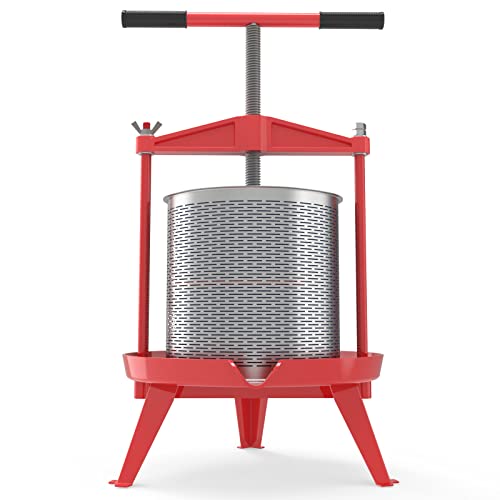
- 14-liter stainless steel basket
- High-pressure Acme screw
- Detachable basket for cleanup
Best For: Durable home orchard and brewing use
Classic Manual Pick
SQUEEZE master 4.75-Gallon Cider Press

- 4.75-gallon capacity
- Manual, rust-resistant stainless-steel design
- Includes fruit crusher
Best For: Home users pressing apples and other hard produce
Easy-Clean Batch Option
VEVOR 15-Liter Manual Cider Press
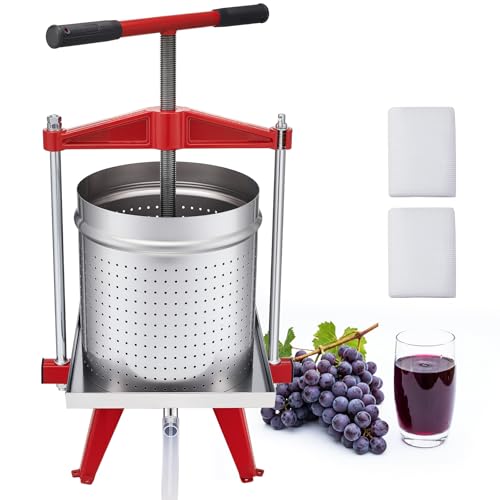
- 3.96-gallon capacity
- Includes two filter bags
- Removable bucket for rinsing
Best For: Home brewing and versatile small-batch pressing
High-Capacity Hydraulic Choice

- 7.93-gallon capacity
- 3 tons of hydraulic pressure
- AISI 304 stainless-steel juice-contact parts
Best For: Large-batch pressing at home, farms, or wineries
Compact Beechwood Pick

- 1.6-gallon capacity for small batches
- Solid beechwood basket with breakaway design
- Quiet, manual operation with built-in spout
Best For: Home juice and wine making
Stainless-Steel Workhorse
Manual Fruit Crusher and Press
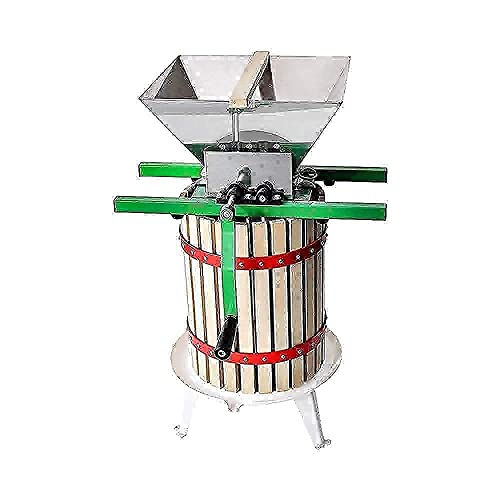
- 7-liter capacity for varied fruit batches
- 304-grade stainless steel and iron construction
- Portable, quiet, motor-free operation
Best For: Kitchen fruit pressing and seasonal harvests
Large-Batch Traditionalist
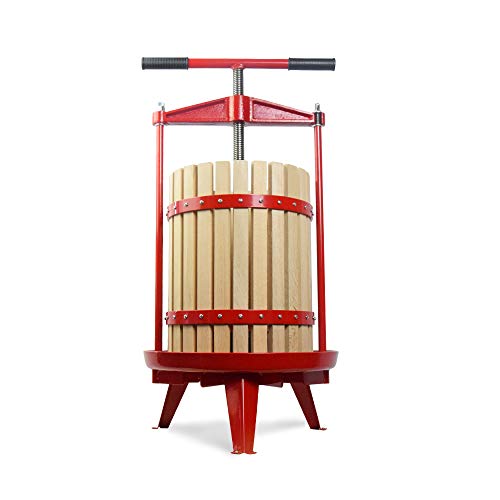
- 4.75-gallon capacity for 22–33 pounds of fruit
- T-handle design helps reduce pressing effort
- Includes a filter bag for juice processing
Best For: Families and small juice operations
Best High-Capacity Wooden Press – 4.75-Gallon Manual Cider Press
Among cider presses, this 4.75-gallon model is a practical choice for home users who want a generous beechwood basket and manual control. Its heavy-duty stand, built-in pour spout, and optional foot mounting holes support steadier pressing of apples, grapes, and berries.
Best For: Families, seasonal harvests, and small-scale juice or wine making.
Pros:
- 4.75-gallon capacity suits larger home batches.
- Solid red beech basket is designed for moisture and wear resistance.
- Built-in spout and removable basket support easier collection and cleanup.
- Manual operation is quiet and requires no motor.
Cons:
- Hand-wash care requires extra cleanup time.
- Its 27.6-inch height and broad footprint need dedicated space.
This is a well-rounded wooden press when capacity and traditional juice extraction matter more than compact storage. The optional mounting holes are useful if you want additional stability during pressing.
Best Fruit Crusher Companion – 7L Manual Apple Crusher
This manual fruit crusher is a useful first step for cider presses, breaking apples and pears into uniform pieces before pressing. Its 7-liter hopper, table-mount components, and food-grade stainless steel construction make it suited to home harvest processing.
Best For: Home brewers who need a dedicated crusher for apples, pears, grapes, and other fruit.
Pros:
- 7-liter hopper handles a practical home-sized load.
- Designed to process approximately 35–45 kg of fruit per hour.
- Produces uniform 1/4-inch pieces that are easier to press.
- 304 stainless steel and reinforced iron construction support durability.
Cons:
- This is a crusher, not a complete juice press.
- Table mounting is needed for secure operation.
- Hand-wash-only care adds cleanup work.
Choose this model when efficient pulping is the missing link in your cider setup. It pairs naturally with a separate press and can help reduce waste by preparing consistent fruit pieces.
Best Compact Wooden Press – 3.2-Gallon Manual Cider Press
EJWOX 3.2 Gallon Fruit and Wine Press, Manual Cider Press with Solid Beech Wood Basket
Check Price On AmazonFor shoppers comparing cider presses for smaller batches, this 3.2-gallon wooden model offers a more compact alternative to larger presses. The solid beech basket, manual screw action, built-in spout, and optional foot mounting holes are designed for controlled juice extraction.
Best For: Smaller households and home users making apple juice or modest wine batches.
Pros:
- 3.2-gallon capacity is appropriate for smaller pressing sessions.
- Solid red beech basket supports traditional fruit and wine pressing.
- Breakaway basket design helps remove pulp between batches.
- Built-in spout simplifies juice collection.
Cons:
- Lower capacity means more rounds for larger harvests.
- Hand-wash-only care requires manual cleanup.
- Manual pressing requires physical effort.
This press is a sensible fit when storage space and batch size are priorities. It keeps the straightforward, quiet operation of a traditional wooden press while avoiding the capacity of a larger commercial-style unit.
Best Stainless Steel Press – 3.69-Gallon T-Handle Cider Press
This stainless steel option stands out among cider presses for its heavy-duty T-handle and large-diameter Acme screw. The 14-liter basket provides a useful batch size, while the detachable basket and corrosion-resistant materials are practical for repeated home brewing and harvest-season use.
Best For: Home brewers and orchard users who want durable materials and lower-effort manual pressing.
Pros:
- 14-liter basket supports relatively large batches.
- T-handle and Acme screw are designed to create high pressure with less effort.
- Food-grade stainless steel basket resists rust and corrosion.
- Detachable basket makes cleanup more convenient.
Cons:
- Its 25.9-inch height and 22-inch depth require substantial space.
- Hand-wash-only care still requires hands-on cleanup.
- Manual operation may be slower than powered equipment for very large harvests.
This is a strong choice if you prefer stainless steel over wood and want a manual press that emphasizes leverage. Its capacity and detachable basket make it especially practical for recurring seasonal use.
Classic Manual Pick – SQUEEZE master 4.75-Gallon Cider Press
For shoppers comparing cider presses, this SQUEEZE master combines a 4.75-gallon wooden basket with a stainless-steel fruit crusher. Its manual, rust-resistant construction is designed for home pressing without relying on electricity.
Best For: Home users who want a manual press for apples and other hard fruits or vegetables.
Pros:
- 4.75-gallon capacity suits substantial home batches.
- Long hand shank and phase-in pressing design are intended to reduce effort.
- Thick pressing plate and larger stressed area support thorough juice extraction.
- Stainless-steel construction is food-grade, rust resistant, and durable.
Cons:
- Manual operation requires physical effort.
- Hand-wash-only care may take more time after pressing.
- The included crusher and press use separate stated capacities.
This is a practical choice if you value portability and straightforward manual operation. The stainless-steel components and wooden basket make it versatile for fruit and vegetable processing, while the larger capacity supports bigger batches.
Easy-Clean Batch Option – VEVOR 15-Liter Manual Cider Press
This VEVOR model is a versatile option among cider presses, offering a 3.96-gallon stainless-steel press with two filter bags. Its T-shaped handle and removable bucket are geared toward manageable home brewing and easier cleanup.
Best For: Home kitchens, orchards, farms, and small-batch brewing where easy cleaning matters.
Pros:
- 15-liter capacity supports larger juicing batches.
- T-shaped handle provides a straightforward manual pressing action.
- Thickened 0.18-inch pressing plate is designed for efficient extraction.
- Removable bucket rinses easily, and two filter bags are included.
Cons:
- At 26.5 pounds, it is not a lightweight press.
- Cutting fruit before pressing is recommended for better results.
- Manual operation requires continued effort during pressing.
Choose this press if you want a home-friendly balance of capacity, filtration, and cleanup convenience. Its applications extend beyond cider to fruit wine, vegetables, honey, olive oil, and herbal mash.
High-Capacity Hydraulic Choice – Mosakar 30-Liter Cider Press
For larger batches, this Mosakar hydraulic press stands out among cider presses with a 7.93-gallon capacity and 3 tons of pressure. Juice-contact parts use AISI 304 stainless steel, while the powder-coated frame is built for durable use.
Best For: Larger home, orchard, farm, or winery batches requiring high capacity and strong pressing force.
Pros:
- 30-liter capacity handles substantial quantities of fruit.
- Hydraulic system provides up to 3 tons of pressure.
- Juice-contact components are made from AISI 304 stainless steel.
- Powder-coated frame is designed for a strong, durable covering.
Cons:
- At 66 pounds, it is comparatively heavy and less convenient to move.
- Its large 30-inch height requires sufficient storage space.
- The supplied notes do not indicate included filter bags or a crusher.
This is the strongest fit for buyers prioritizing batch size and pressing force over portability. Its stainless-steel juice-contact parts and durable frame support repeated pressing, provided you have room for its substantial footprint.
Compact Beechwood Pick – 1.6-Gallon Manual Cider Press
For shoppers comparing cider presses for occasional home use, this 1.6-gallon manual model offers a compact wooden basket, a heavy-duty stand, and a straightforward hand-crank design. It is sized for apples, grapes, and berries, with a built-in spout to simplify juice collection.
Best For: Home users making small batches of fresh juice or homemade wine.
Pros:
- Solid red beechwood basket is designed for moisture and wear resistance.
- Manual operation is quiet and requires no motor.
- Built-in pour spout and optional foot mounting holes support cleaner, steadier pressing.
- Breakaway basket design helps with pulp removal between batches.
Cons:
- Its 1.6-gallon capacity is better suited to small batches than larger harvests.
- Hand-wash care may require extra cleanup time.
This is a practical choice when compact storage, quiet operation, and traditional wooden construction matter more than high-volume throughput.
Stainless-Steel Workhorse – Manual Fruit Crusher and Press
Fruit Wine Press and Crusher,100% Nature Apple&Grape&Berries Crusher Manual Juice Maker for Kitchen
Check Price On AmazonAmong cider presses for kitchen and harvest use, this manual fruit press stands out for its 7-liter capacity and metal construction. It is designed to crush and press apples, grapes, berries, pears, and oranges without a motor, while aiming for high juice yield and drier pulp.
Best For: Users who want a portable manual press for varied fruits and modest-size batches.
Pros:
- 304-grade stainless steel, iron, and metal components are built for repeated use.
- Manual, motor-free operation is quiet and portable.
- 7-liter capacity provides more room than a compact countertop press.
- Designed to reduce foaming and oxidation while supporting efficient juice extraction.
Cons:
- Hand-wash-only care can make cleanup more involved.
- The uncoated metal finish may require attentive drying after washing.
This model makes sense for buyers seeking a durable, versatile fruit press with enough capacity for regular kitchen processing without adding a motor.
Large-Batch Traditionalist – 4.75-Gallon T-Handle Press
For larger batches, this 4.75-gallon manual cider press combines a solid wood basket with a T-handle designed to make pressing more manageable. Its thicker press plate and broad contact area are intended to improve extraction, while the included filter bag helps with juice processing.
Best For: Families, farm stands, eateries, and small fresh-juice operations handling substantial fruit loads.
Pros:
- 4.75-gallon capacity can process approximately 22 to 33 pounds of fruit at once.
- T-handle and spiral, phase-in pressing design are intended to reduce effort.
- Thick, broad press plate supports thorough pressing and higher juice yield.
- Includes one filter bag and can press fruit plus materials such as vinasse, oil pomace, and honeycomb.
Cons:
- At 40.1 inches tall, it needs considerable storage and operating space.
- Its large capacity may be excessive for occasional small-batch use.
- Hand-wash-only care adds to post-press cleanup.
This is the strongest fit for buyers prioritizing batch size and traditional pressing leverage over compactness or easy storage.
How We Picked These Cider Presses
We focused on the factors that matter most during real fruit processing: basket capacity, frame stability, pressing mechanism, food-contact materials, operating effort, and cleanup. The selection includes compact presses for occasional kitchen use, mid-size models for home orchards and brewing, and a hydraulic option for users who need greater pressure and batch capacity.
We also considered practical design details such as T-handle leverage, cross-beam strength, removable components, stainless-steel construction, and solid wood baskets. Since apples, grapes, and berries behave differently, versatility was important as well.
Quick Comparison
| Best For | Recommended Capacity | Useful Features |
|---|---|---|
| Small kitchens and occasional use | 1.6 to 3.2 gallons | Compact footprint, manual operation, easier storage |
| Typical home cider batches | 3.69 to 4.75 gallons | Balanced capacity, sturdy frames, wood or stainless baskets |
| Frequent pressing and larger harvests | 7.93 gallons | Hydraulic pressure, larger basket, reduced manual effort |
| Users needing fruit preparation too | Crusher-and-press combination | Integrated grinding or pulping before pressing |
Key Buying Factors for Cider Presses
Capacity and Batch Size
Capacity determines how much prepared fruit you can load at once. A 1.6-gallon press suits small batches, testing recipes, or limited storage. Models around 3.2 to 4.75 gallons are a practical middle ground for many households. Choose a roughly 8-gallon hydraulic model when processing a substantial harvest and minimizing repeated loads is more important than portability.
Pressing Mechanism and Leverage
Manual screw presses are straightforward and relatively easy to maintain, but they require repeated turning. T-handles and long cross-beams improve leverage. Hydraulic presses can apply stronger, more consistent pressure with less physical effort, although they are typically heavier, larger, and more expensive.
Materials and Food Safety
Solid beech baskets offer a traditional design and can work well when properly cleaned and dried. Stainless-steel baskets and juice-contact parts are easier to sanitize and resist corrosion, especially when handling acidic fruit. Check that coatings, fasteners, and collection surfaces are suitable for food contact.
Frame Stability and Cleanup
A stable stand helps prevent rocking as pressure increases. Look for a broad base, strong cross-beam, and secure basket support. Removable baskets and accessible surfaces make cleanup faster; rinse fruit residue promptly and dry wooden components thoroughly to reduce odors and warping.
Crusher Compatibility
Apples usually need to be crushed or pulped before pressing for efficient extraction. If you do not already own a scratter or grinder, a crusher-and-press setup may save time. Separate tools can offer more flexibility, while an integrated unit saves workspace and simplifies the workflow.
Who Should Buy Which Cider Presses?
Choose a compact manual press if you make small quantities, have limited storage, or want an affordable introduction to home juicing. Choose a mid-size 3.69- to 4.75-gallon press for the best balance of capacity, control, and countertop or garage usability. Choose a stainless-steel model if quick sanitation and corrosion resistance are priorities. Choose a crusher-and-press combination if you need to prepare whole apples or other firm fruit as part of the same workflow. Choose the hydraulic press for larger harvests, repeated batches, or anyone who wants more pressing force with less manual strain.