Finding the best dough kneading machine for a small bakery means balancing batch capacity, mixing performance, footprint, and budget. The right machine should handle your busiest production periods without taking over valuable workspace.
These 10 options cover compact countertop mixers, dual-rotation dough machines, spiral-style mixers, and heavier commercial units. Use the buying guide below to match capacity and features to your recipes and daily output.
Best 10 Dough Kneading Machines for Small Bakeries Picks for 2026
Heavy-Duty Pick
WantJoin 10.5Qt Dual-Rotation Mixer

- 750W motor with dual-rotation kneading
- Handles up to 11 lb of dough
- Digital 60-minute timer and safety shield
Best For: Small bakeries needing larger dough batches
Multi-Purpose Choice

- Includes hook, beater, and wire whip
- Three speeds for varied recipes
- 30-minute timer and safety shield
Best For: Bakeries needing dough and general mixing
Fermentation-Focused Pick

- Winter and Summer fermentation modes
- Four adjustable mixing and fermentation modes
- 9.5-quart bowl with stainless steel blade
Best For: Small batches requiring controlled fermentation
Compact Commercial Pick
VEVOR 8.5Qt Dual-Rotation Mixer
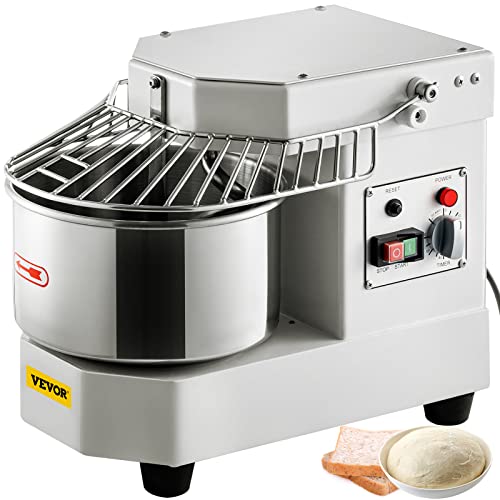
- Dual-rotation 450W kneading system
- Handles up to 6.6 lb of dough
- 60-minute timer with safety shutdown
Best For: Small production runs needing dual rotation
Premium Spiral Pick

- 7.3-quart rotating-bowl spiral system
- 58 speeds from 60 to 1,000+ RPM
- Four attachments for dough and baking tasks
Best For: Small bakeries wanting precise, versatile mixing
High-Capacity Workhorse
30QT Commercial Electric Dough Mixer

- 30-quart stainless-steel mixing container
- 1,500-watt motor with double gears and belts
- Forward and reverse rotation with tilting bowl
Best For: Small commercial bakeries producing larger dough batches
Best Home-Scale Proofing Pick
AIZIYO DoughChief 7.4QT Dough Mixer

- 7.4-quart 304 stainless steel bowl
- Built-in 77–100°F fermentation mode
- Removable lid and dough blade
Best For: Small bakeries needing moderate-capacity mixing and proofing
Best Value Commercial Workhorse
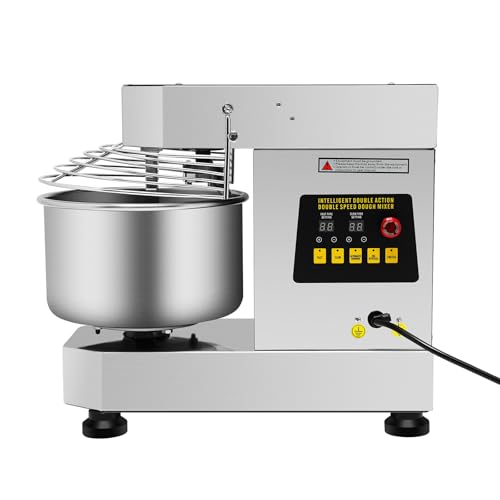
- 750-watt copper-core motor
- 10-liter capacity for 2.2–11 pounds of dough
- Dual speeds and rotating-bucket mixing
Best For: Small bakeries and pizzerias needing straightforward batch mixing
Best Heavy-Duty Safety Pick
Garvee 10.5QT Commercial Dough Mixer

- Dual-rotation 650-watt mixing system
- Handles up to 11 pounds of dough
- Safety shield and 60-minute timer
Best For: Small commercial kitchens prioritizing capacity and controlled operation
Heavy-Duty Pick – WantJoin 10.5Qt Dual-Rotation Mixer
For small bakeries seeking dough kneading machines for small bakeries, the WantJoin combines a 10.5-quart stainless steel bowl with a 750W motor and dual-rotation kneading. Its digital controls and commercial-oriented construction make it suited to recurring bread, pizza, bagel, and pastry prep.
Best For: Small bakeries and pizzerias that need up to 11 pounds of dough per batch.
Pros:
- Dual-rotation system supports smoother, more elastic dough.
- 10.5-quart food-grade stainless steel bowl handles up to 5 kg of dough.
- Digital controls and a timer can be set for up to 60 minutes.
- Safety shield, nonslip base, and one-year coverage add practical reassurance.
Cons:
- At 93.7 pounds, it is a substantial piece of equipment.
- The listed dimensions may require dedicated counter or floor space.
The WantJoin is a strong capacity-focused option when consistent dough development and timed operation matter more than portability.
Multi-Purpose Choice – VEVOR 15Qt Commercial Mixer
Among dough kneading machines for small bakeries, this VEVOR model stands out for its three included attachments and broad mixing range. The 15-quart bowl, three speeds, and gear-driven 500W motor support dough, batter, fillings, whipped cream, and other bakery tasks.
Best For: Bakeries that want one commercial mixer for dough preparation and general ingredient mixing.
Pros:
- Includes a dough hook, flat beater, and wire whip.
- Three speeds cover kneading, mixing, and whipping applications.
- Food-contact components are stainless steel and designed for easier cleaning.
- 30-minute timer and automatic shutdown when the shield is not closed improve convenience and safety.
Cons:
- Despite the 15-quart bowl, the stated food capacity is up to 3.3 pounds.
- Its 127.9-pound weight makes repositioning difficult.
- The machine should be stopped before changing speed.
This VEVOR is best viewed as a versatile bakery workhorse rather than a high-volume dough-only machine, especially when multiple attachments are valuable.
Fermentation-Focused Pick – Joydeem 9.5Qt Dough Maker
The Joydeem offers a different approach to dough kneading machines for small bakeries by combining intermittent kneading with built-in fermentation modes. Its 9.5-quart bowl, adjustable timing, and Mix, Ferment, Mix + Ferment, and Blend settings make it useful for bread, pizza, sourdough, roti, dumplings, and fillings.
Best For: Small baking operations that value controlled dough fermentation alongside kneading.
Pros:
- Winter and Summer fermentation modes support year-round preparation.
- Mixing time adjusts from 5 to 30 minutes, while fermentation runs from 5 to 120 minutes.
- 9.5-quart capacity accommodates up to 2,800g of flour, with a 2,500g fermented-dough recommendation.
- 304 stainless steel bowl and blade are durable and easy to clean.
Cons:
- The 300W motor is less powerful than the commercial mixers in this group.
- The stated one-year replacement support is for home use only.
- The body uses both plastic and stainless steel rather than an all-metal construction.
Choose the Joydeem when fermentation control and recipe flexibility are priorities; it is particularly appealing for smaller batches and varied dough styles.
Compact Commercial Pick – VEVOR 8.5Qt Dual-Rotation Mixer
For operations comparing dough kneading machines for small bakeries, this compact VEVOR provides dual-rotation kneading in an 8-liter bowl. Its 450W motor, 60-minute timer, safety shield, and nonslip feet focus on straightforward dough preparation for bakery and restaurant use.
Best For: Small bakeries that want dual-rotation kneading for batches of up to 6.6 pounds.
Pros:
- Dual rotation uses a 21 RPM bowl and 159 RPM hook to support even mixing.
- Stated capacity reaches up to 3 kg or 6.6 pounds of dough.
- 60-minute timer, reset button, and waterproof-covered controls simplify operation.
- Automatic shutdown, auxiliary rod, and nonslip feet support safer, steadier mixing.
Cons:
- It has only one listed speed.
- The 8-liter bowl is smaller than the 10.5- and 15-quart alternatives.
- At 81.6 pounds, it is still not especially portable.
This model is a practical middle-ground choice for smaller production runs, offering commercial-style dual rotation without the largest footprint or capacity in the group.
Premium Spiral Pick – Ooni Halo Pro Spiral Mixer
For small bakeries seeking dough kneading machines for small bakeries that can also handle general baking tasks, the Ooni Halo Pro combines spiral mixing with unusually fine speed control. Its 7.3-quart stainless-steel bowl and 650-watt motor suit smaller production runs, while the included attachments extend its usefulness beyond dough.
Best For: Small bakeries and serious home-based businesses needing versatile dough, cake, cookie, and cream preparation.
Pros:
- Spiral mixing system with a rotating bowl, spiral dough hook, and removable breaker bar is designed to develop stronger gluten networks.
- 58 speed settings range from 60 to more than 1,000 RPM for precise control.
- Includes a breaker bar, flexible beater, spiral dough hook, and geared whisk.
- Removable stainless-steel bowl and touch controls support a flexible workflow.
Cons:
- Its 7.3-quart capacity is smaller than that of dedicated 30-quart commercial mixers.
- The 14.6-kilogram weight may make frequent repositioning inconvenient.
- Its broad attachment set may be unnecessary if your bakery only kneads dough.
The Halo Pro is the most versatile option here, especially when dough production shares space with other baking jobs. Choose it when control and multi-purpose capability matter more than maximum batch size.
Proofing Convenience Pick – Joydeem Electric Dough Maker
Among dough kneading machines for small bakeries, the Joydeem Electric Dough Maker stands out for automated kneading and fermentation rather than adjustable mixing speed. Its 6.6-quart capacity, preset programs, and compact vertical design can simplify recurring bread, pizza, bun, and dumpling batches.
Best For: Small operations that value automated kneading, timed fermentation, and straightforward batch preparation.
Pros:
- Microcomputer controls provide preset timing and program selection.
- Can knead dough in about 15 minutes or knead and proof in about 45 minutes, with a drip alert.
- Intermittent kneading motion is designed to simulate natural or manual dough making.
- Stainless-steel bucket and dough blade are dishwasher safe; the top cover is removable.
Cons:
- It has one speed and no speed adjustment for more specialized mixing control.
- The 250-watt motor is less powerful than the 1,500-watt commercial model in this selection.
- The listed noise level is 70 dB, so it is not silent during operation.
Joydeem is a practical choice when repeatability and fermentation assistance are more important than heavy-duty versatility. Its moderate capacity and automated programs fit smaller batches, but higher-volume bakeries may need a stronger commercial machine.
High-Capacity Workhorse – 30QT Commercial Electric Dough Mixer
For bakeries handling larger dough batches, this 30-quart commercial mixer offers substantially more capacity than countertop dough kneading machines for small bakeries. Its 1,500-watt motor, forward-and-reverse operation, and heavy-duty construction are aimed at demanding pizza, bakery, restaurant, or school workflows.
Best For: Small commercial bakeries that need larger batches and a dedicated heavy-duty dough mixer.
Pros:
- 30-quart stainless-steel mixing container supports large dough batches.
- 1,500-watt motor, double gears, and belts provide strong mixing power.
- Forward rotation makes dough; reverse rotation helps with dough removal.
- 90-degree container tilt supports cleaning and taking out finished dough.
Cons:
- Its 109.3-pound weight and large footprint require dedicated floor space.
- The listed 85 dB noise level may be noticeable in a small workspace.
- It is specialized equipment with push-button controls rather than broad speed adjustment.
This mixer is the capacity leader and the clearest fit for production-oriented work. It is excessive for occasional small batches, but its large bowl, powerful motor, and reverse function can better match a bakery’s daily output needs.
Best Home-Scale Proofing Pick – AIZIYO DoughChief 7.4QT Dough Mixer
For small bakeries that also handle family-size or test batches, the AIZIYO DoughChief is a compact option among dough kneading machines for small bakeries. Its 7.4-quart stainless steel bowl, hand-kneading-style mix-pause-mix program, and built-in fermentation mode support bread, pizza, pasta, and mochi dough.
Best For: Small bakeries needing moderate-capacity mixing plus integrated dough proofing.
Pros:
- 7.4-quart 304 stainless steel bowl can handle multiple loaves or a large pizza dough batch.
- Fermentation mode maintains approximately 77–100°F for dough proofing and yeast activation.
- Removable lid and detachable dough blade simplify ingredient access and cleanup.
- Touch controls, time setting, and low-noise operation suit routine baking tasks.
Cons:
- The 250-watt motor and single speed are less suited to demanding, high-volume production.
- Fermentation requires yeast or fermentation powder.
- Its listed capacity is smaller than the commercial 10-liter-class mixers in this roundup.
The DoughChief stands out when proofing convenience and easier cleanup matter as much as kneading. It is better aligned with smaller batches and flexible daily baking than with continuous commercial production.
Best Value Commercial Workhorse – 10L 750W Electric Dough Mixer
This 10-liter mixer is a straightforward choice among dough kneading machines for small bakeries that need more power and batch capacity than a home-oriented unit. Its 750-watt copper-core motor, dual speeds, and spiral stirring system are designed for bread, pizza, cakes, pastries, and other kitchen prep.
Best For: Small bakeries and pizzerias seeking a sturdy, hands-free mixer for batches from about 2.2 to 11 pounds of dough.
Pros:
- 750-watt motor offers more mixing power for regular commercial-style use.
- 10-liter bowl accommodates approximately 2.2–11 pounds of dough.
- Spiral rod and rotating bucket increase flour contact for more even mixing.
- Waterproof switch and rubber support feet add practical stability and usability.
Cons:
- The 201 stainless steel construction is not the same as 304 food-grade stainless steel.
- At 21.7 inches deep and 18.9 inches high, it requires substantial counter or floor space.
- It lacks the integrated fermentation function offered by the AIZIYO model.
This model prioritizes power, capacity, and uncomplicated operation. It makes sense for a small bakery that wants a dedicated kneading machine without paying for built-in proofing or advanced controls.
Best Heavy-Duty Safety Pick – Garvee 10.5QT Commercial Dough Mixer
The Garvee 10.5QT is a heavy-duty option among dough kneading machines for small bakeries, offering a dual-rotation design, timer, and safety shield. Its 650-watt motor and food-grade stainless steel food-contact parts are suited to dough batches of up to 11 pounds in roughly 10–15 minutes.
Best For: Small commercial bakeries, restaurants, and pizzerias that value batch capacity, timed mixing, and operator protection.
Pros:
- 10.5-quart bowl handles up to 11 pounds of dough.
- Dual rotation combines a 21-rpm bowl with a 129-rpm hook for thorough mixing.
- 60-minute timer, overload protection, and reset button support repeatable operation.
- Security shield automatically powers off the machine when not tightly closed.
Cons:
- At 105 pounds, it is difficult to move once installed.
- Its 25.39-inch height and 21.26-inch depth require significant space.
- Two speeds provide less speed flexibility than a broader multi-speed mixer.
The Garvee is the most substantial choice here for a bakery with a fixed workstation and regular dough production. Its timer and safety interlock are especially useful when consistency and controlled operation matter.
How We Picked the Best Dough Kneading Machines for Small Bakeries
We focused on machines suited to the practical demands of small commercial baking: dough capacity, motor power, bowl construction, kneading design, controls, safety features, and ease of cleaning. The selection includes compact 7.4- to 10.5-quart models for bakeries with limited space, as well as 15- and 30-quart machines for higher-volume production.
We also considered useful bakery features such as timing controls, fermentation functions, removable or stainless-steel bowls, splash or security shields, and multiple operating modes. Because flour type, hydration, and recipe size affect performance, published capacity should be treated as a starting point rather than a guaranteed dough-weight rating.
Quick Comparison
| Best for | Look for | Models in this roundup |
|---|---|---|
| Small batches and limited counters | 7.4- to 8.5-quart capacity, compact design | Joydeem, AIZIYO, VEVOR 8.5Qt |
| Regular bread and pizza production | 9.5- to 10.5-quart bowl, dual rotation, safety shield | WantJoin, Garvee, Joydeem 9.5Qt |
| Higher-volume bakery work | 15- to 30-quart capacity and heavier construction | VEVOR 15Qt, 30QT commercial mixer |
| Versatile mixing beyond dough | Attachments, multiple speeds, or blend functions | Ooni Halo Pro, Joydeem 9.5Qt |
Key Buying Factors for Dough Kneading Machines for Small Bakeries
Capacity and Batch Size
Choose a bowl that comfortably handles your usual batch, not merely your largest occasional recipe. A 7.4- to 10.5-quart machine may suit a bakery producing several modest batches per day, while a 15- or 30-quart unit can reduce repeated mixing during busy periods. Avoid filling the bowl to its maximum with stiff dough, since overloaded machines may struggle or wear faster.
Motor and Kneading Action
Wattage is useful for comparison, but it does not tell the entire story. Gear design, mixing speed, dough hydration, and whether the machine uses dual-rotation or spiral-style kneading also affect results. For dense bagel or pizza dough, prioritize a machine designed for heavy dough rather than choosing solely by the highest advertised wattage.
Controls, Timing, and Fermentation
Digital timers can improve consistency and free staff for other tasks. Fermentation functions may be valuable if you want mixing and proofing in one appliance, but they should not replace proper temperature and humidity control for production baking.
Safety, Cleaning, and Workspace
Look for bowl guards, security shields, overload protection, stable feet, and controls that are easy to reach. Stainless-steel bowls are generally practical in commercial kitchens. Confirm the machine’s dimensions, electrical requirements, ventilation needs, and whether the bowl or attachments can be removed for thorough cleaning.
Who Should Buy Which Dough Kneading Machines for Small Bakeries?
Choose a compact 7.4- to 8.5-quart model if you have limited counter space or produce smaller batches throughout the day. These machines are a sensible fit for cottage-scale operations, cafés, and bakeries testing new recipes.
Choose a 9.5- to 10.5-quart dual-rotation mixer for a balanced all-around option. It offers more working room for bread, pizza, and enriched dough without the footprint of a large floor machine.
Choose a 15- or 30-quart commercial mixer if demand is consistently high and repeated small batches slow your workflow. Verify available power, floor space, and minimum dough requirements before purchasing.
Choose a feature-rich or attachment-compatible model if versatility matters as much as kneading. These options may suit bakeries that also prepare fillings, batters, or other ingredients, provided their dough capacity matches your production needs.