Choosing a stand mixer for beginners can make everyday baking easier, but the right model depends on more than bowl size. Speed control, counter space, handling, and included attachments all affect how confidently you can mix, knead, and whip.
We compared 10 approachable options, from compact mixers for small kitchens to larger models suited to frequent bread and batch baking. Use the guide below to narrow the list by your recipes, workspace, and budget.
Best 10 Stand Mixer for Beginners Picks for 2026
Classic Foundation
KitchenAid Classic 4.5-Quart Mixer

- Durable metal construction
- 10 speeds and core attachments
- Compatible with optional attachments
Best For: Beginners seeking a durable, expandable mixer
Easy-Move Starter
Hamilton Beach 4-Quart Stand Mixer

- Planetary mixing for bowl coverage
- Includes splash guard and three attachments
- Built-in handle aids storage
Best For: Beginners prioritizing simple operation and portability
Family-Size Pick
VIVOHOME 6-Quart Tilt-Head Mixer

- 660-watt motor with 10 speeds plus pulse
- Large 6-quart bowl for bigger batches
- Includes splash guard and egg separator
Best For: Beginners preparing family-size batches
Smart-Control Option

- Digital display with adjustable timer
- 650-watt motor and 5-quart bowl
- Includes three attachments and splash guard
Best For: Beginners wanting timer-based mixing control
Best Overall
KitchenAid Artisan 5-Qt Stand Mixer

- 5-quart bowl for larger batches
- 10 speeds from stir to whip
- Tilt head and pouring shield included
Best For: New bakers who want a versatile full-size mixer
Best Small-Kitchen Pick
Kitchen in the box 3.2-Qt Mini Mixer
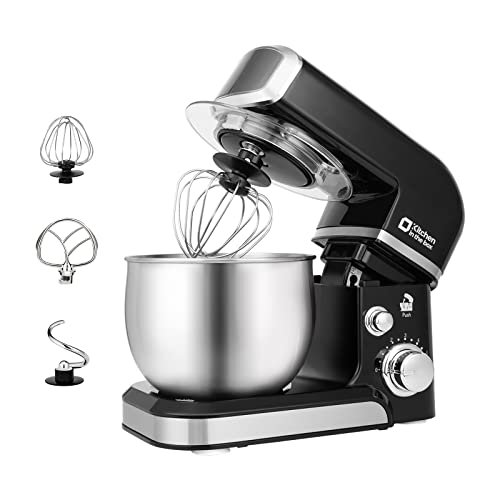
- Compact design for apartments
- Six speeds and three attachments
- Lightweight body with anti-slip suction cups
Best For: Small households and space-conscious beginners
Best Budget-Friendly Compact Pick
Dash 3-Qt Everyday Stand Mixer

- Lightweight, compact countertop design
- Six speeds for everyday recipes
- 3-quart bowl and dishwasher-safe parts
Best For: Casual bakers in first apartments or small kitchens
Small-Space Starter

- Lightweight design for easy storage and moving
- 10 speeds with planetary mixing action
- Includes bowl, hook, beater, whisk, and splash guard
Best For: Beginners and small households
Batch-Baking Upgrade
Martha Stewart 5.3-Quart Mixer

- Large stainless steel bowl for bigger batches
- 12 speeds and 660-watt motor
- Tilt head and removable splash shield ease use
Best For: Beginners planning family-size baking
Versatile Everyday Pick

- Planetary mixing provides full bowl coverage
- Seven speeds for common baking tasks
- Includes three attachments and splatter shield
Best For: Beginners wanting a balanced everyday mixer
Classic Foundation – KitchenAid Classic 4.5-Quart Mixer
The KitchenAid Classic is a dependable stand mixer for beginners who want a durable, familiar design for everyday baking. Its tilt-head access, 10 speeds, and included core attachments cover everything from cookie dough to whipped cream.
Best For: Beginners who want a long-lasting mixer with broad attachment compatibility.
Pros:
- Durable metal construction with 59 touchpoints for thorough mixing.
- Includes a 4.5-quart stainless steel bowl, flat beater, dough hook, and wire whip.
- Ten speeds support tasks from gentle stirring to whipping.
- Compatible with more than 10 optional KitchenAid attachments.
Cons:
- Optional attachments are sold separately.
- Its 4.5-quart capacity is smaller than some alternatives in this roundup.
- At 24.2 pounds, it is less convenient to move frequently.
This is a strong introductory choice if you value sturdy construction and a proven accessory ecosystem more than portability. The tilt-head design also makes it straightforward to add ingredients and change attachments.
Easy-Move Starter – Hamilton Beach 4-Quart Stand Mixer
The Hamilton Beach 4-Quart mixer is a practical stand mixer for beginners who want simple controls and easy storage. Its mixing guide, slow first speed, planetary action, and built-in handle make routine baking approachable.
Best For: New bakers who need an affordable-feeling, easy-to-move setup for batters, cookies, and bread dough.
Pros:
- Planetary mixing action provides full bowl coverage.
- Includes a stainless steel bowl, splash guard, dough hook, whisk, and flat beater.
- Seven speeds include a slow first setting to reduce splatter.
- Built-in handle makes lifting and storage easier.
Cons:
- The 4-quart bowl is the smallest listed capacity in this roundup.
- It has seven speeds rather than the 8- or 10-speed controls offered by the other options.
- The housing uses plastic and stainless steel rather than an all-metal construction.
For beginners who are still deciding how often they will bake, this model keeps the learning curve low with a top-mounted mixing guide and straightforward attachments. The handle is especially useful if the mixer will be stored between uses.
Family-Size Pick – VIVOHOME 6-Quart Tilt-Head Mixer
The VIVOHOME 6-Quart is a capable stand mixer for beginners who expect to make larger batches. It combines a 660-watt motor, 10 speeds plus pulse, a large bowl, and stability features with a tilt-head design that keeps setup accessible.
Best For: Households of two to four people making bread, cakes, and larger batches.
Pros:
- Six-quart bowl holds up to three bread loaves or 2.2 pounds of flour, according to the supplied notes.
- Includes a whisk, dough hook, beater, egg separator, and splash guard.
- Ten speeds plus pulse support a broad range of recipes.
- Suction cups and low-noise operation help with stability and comfort.
Cons:
- Its 18.8-inch height may require extra storage clearance.
- The listed 65 dB noise level means it is not silent.
- The included hook and beater use aluminum rather than stainless steel.
The larger capacity gives beginners room to grow into bread baking and batch cooking without immediately needing a bigger machine. A flex-edge beater and upgraded splash guard also reduce interruptions while mixing.
Smart-Control Option – CUSIMAX 5-Quart Digital Mixer
The CUSIMAX is a stand mixer for beginners who prefer guided, programmable operation. Its digital display, adjustable timer, 650-watt motor, and 5-quart bowl provide useful control for cakes, cookies, bread, and other everyday recipes.
Best For: Beginners who want a timer-equipped mixer with a compact tilt-head design.
Pros:
- Digital display combines eight speeds with a 15-minute adjustable timer.
- Five-quart stainless steel bowl suits a variety of home baking tasks.
- Includes a whisk, dough hook, beater, and splash guard.
- Overheating protection and anti-slip suction cups add practical safeguards.
Cons:
- The digital controls require following the operation sequence described in the manual.
- It offers eight speeds, fewer than the 10 speeds on some competing models.
- The housing is sturdy ABS rather than metal.
The timer can help beginners repeat recipes more consistently without watching the clock. Its 5-quart capacity sits between the smaller Hamilton Beach and larger VIVOHOME, making it a balanced option for regular home baking.
Best Overall – KitchenAid Artisan 5-Qt Stand Mixer
For beginners who want room to grow, the KitchenAid Artisan is a capable stand mixer for beginners with a 5-quart bowl, 10 speeds, and a convenient tilt-head design. Its slow stir setting and fast whip speed provide useful control across everyday mixing tasks.
Best For: New bakers who want a versatile, full-size mixer for larger batches and varied recipes.
Pros:
- 5-quart capacity offers more room than compact beginner mixers.
- 10-speed slide control ranges from slow stirring to fast whipping.
- Tilt-head design and included pouring shield help with adding ingredients cleanly.
- Includes a 1-year hassle-free replacement warranty.
Cons:
- Its full-size design may require more storage space than compact models.
- At 10,000 grams, it is less portable than lightweight alternatives.
The Artisan is a strong long-term choice if you expect to bake regularly or make larger batches. Beginners may appreciate its straightforward knob control and broad speed range, while the removable bowl simplifies cleanup.
Best Small-Kitchen Pick – Kitchen in the box 3.2-Qt Mini Mixer
This compact stand mixer for beginners is designed for limited counter and storage space. The 3.2-quart stainless steel bowl, six speeds, tilt head, and lightweight 7-pound body make it approachable for smaller everyday batches.
Best For: Apartment dwellers, couples, and new bakers making modest portions.
Pros:
- Compact 12.9-by-7-by-10.2-inch design fits small kitchens.
- Six speeds support dough, batter, meringue, and whipped cream.
- Includes a whisk, flat beater, and dough hook.
- Anti-slip suction cups help keep the mixer steady during operation.
Cons:
- The 3.2-quart capacity is less suitable for large batches.
- Its 300-watt motor and compact format are aimed at daily use rather than heavy-volume baking.
With simple knob controls and dishwasher-safe accessories, this model keeps the learning curve and cleanup manageable. It is a practical starting point when countertop space matters more than maximum capacity.
Best Budget-Friendly Compact Pick – Dash 3-Qt Everyday Stand Mixer
The Dash Everyday is a lightweight stand mixer for beginners who want basic mixing help without a large countertop footprint. Its six speeds, 3-quart stainless steel bowl, and fully tilting head cover common tasks such as frosting, batters, doughs, and meringue.
Best For: First-apartment kitchens and casual bakers who prioritize portability and simple controls.
Pros:
- Weighs less than 5 pounds and stands 10.4 inches tall.
- Six speeds and a 250-watt motor handle everyday whipping, beating, and kneading.
- Includes a 3-quart stainless steel bowl, dough hooks, and mixer beaters.
- Non-electric parts are dishwasher safe, and a recipe book is included.
Cons:
- The 3-quart capacity is intended for smaller batches.
- It has fewer speed settings and a smaller bowl than the KitchenAid Artisan.
- The supplied details list no warranty, despite the included component description referencing a 1-year manufacturer warranty.
The Dash is a sensible entry point for occasional baking, especially when easy storage is important. Its tilting head makes bowl and attachment removal straightforward, while the compact size keeps it accessible for smaller kitchens.
Small-Space Starter – Compact 3.5-Quart Mixer
If you are looking for a stand mixer for beginners and mainly bake in small batches, this lightweight Kitchen in the Box model is easy to store and move. Its 3.5-quart bowl, 10 speeds, and included attachments cover everyday cookies, cakes, cupcakes, pizza, and smaller bread recipes.
Best For: Beginners, couples, and apartment kitchens that need a compact mixer for one or two people.
Pros:
- Lightweight, compact design weighs under 5 pounds and fits limited counter space.
- Ten speeds and planetary mixing action provide flexible control for common baking tasks.
- Includes a stainless steel bowl, dough hook, flat beater, whisk, and splash guard; accessories are dishwasher-safe.
Cons:
- The 3.5-quart capacity is better suited to small batches than large-volume baking.
- The 300-watt motor and small bowl may be limiting for frequent heavy dough making.
For a first stand mixer, this model emphasizes portability and simple everyday use rather than maximum capacity. It is a practical choice when storage space and batch size matter most.
Batch-Baking Upgrade – Martha Stewart 5.3-Quart Mixer
For beginners who expect to grow into larger recipes, this Martha Stewart stand mixer offers a generous 5.3-quart bowl and 12 speed settings. The tilt-head design, removable splash shield, and clearly defined attachments make it approachable while providing room for dough, cakes, and large cookie batches.
Best For: New bakers who want a spacious bowl and enough capacity for family-size or larger batches.
Pros:
- 5.3-quart stainless steel bowl handles larger batches, including up to nine dozen cookies according to the supplied specifications.
- Twelve speeds provide detailed control from gentle folding to thicker dough mixing.
- Tilt-head access, pour chute, handle, and dishwasher-safe BPA-free accessories simplify operation and cleanup.
Cons:
- Its larger dimensions require more storage and counter space than compact beginner mixers.
- The 9-pound body is less convenient to move frequently.
This is a strong choice if your definition of a beginner mixer includes room to experiment and bake for more people. Its larger footprint is the main trade-off for the extra capacity and 660-watt motor.
Versatile Everyday Pick – Hamilton Beach 4-Quart Mixer
This Hamilton Beach model is a balanced stand mixer for beginners who want straightforward controls and a useful mid-size bowl. Planetary mixing helps cover the bowl, while seven speeds and three attachments support cookies, whipped cream, pizza dough, and other everyday recipes.
Best For: Beginners seeking a practical all-purpose mixer with a moderate 4-quart capacity.
Pros:
- Planetary mixing action rotates the attachments around the bowl for thorough coverage.
- Seven speeds handle tasks from gently combining ingredients to whipping cream.
- Includes a dough hook, flat beater, whisk, stainless steel bowl, and removable dishwasher-safe splatter shield.
Cons:
- Seven speeds provide less adjustment than the 10- and 12-speed alternatives.
- The 4-quart capacity sits between compact and large-batch models, so it may not suit every household.
With a 300-watt motor, familiar knob control, and a one-year warranty, this mixer keeps the feature set approachable. It is a sensible middle ground for beginners who want versatility without moving to a larger bowl.
How We Picked the Best Stand Mixer for Beginners
We focused on features that matter most to first-time stand mixer owners: straightforward controls, useful speed ranges, bowl capacity, stability, portability, and the ability to handle common recipes. The lineup includes compact 3- to 3.5-quart machines, versatile 4- to 5-quart mixers, and larger 6-quart options.
We also considered practical details such as tilt-head access, carrying handles, stainless steel bowls, included mixing attachments, and whether a model is better suited to occasional cookies and cakes or heavier doughs. Product specifications can vary by seller, so confirm the listed accessories and dimensions before ordering.
Quick Comparison
| Best For | Recommended Capacity | What to Prioritize |
|---|---|---|
| Small kitchens and occasional baking | 3 to 3.5 quarts | Compact footprint, lighter weight, easy storage |
| General-purpose home baking | 4 to 5 quarts | Balanced capacity, stable base, versatile attachments |
| Large batches and frequent baking | 5.3 to 6 quarts | Power, bowl clearance, sturdy construction |
| New users who want simple operation | Any size | Clear speed controls and easy bowl access |
Key Buying Factors for a Stand Mixer for Beginners
Capacity and Counter Space
A 4- or 5-quart bowl is the most flexible choice for typical household recipes. Compact models are easier to store and can be sufficient for cookies, cakes, frosting, and small batches, while larger bowls are useful when doubling recipes or making bread.
Speed Controls and Attachments
Multiple speeds help beginners start slowly when adding flour and increase speed for whipping. Check that the mixer includes the basics—a flat beater, whisk, and dough hook—and look for controls that are easy to adjust while mixing.
Stability, Handling, and Cleanup
A heavier base usually stays steadier during thick mixing, while a handle or lighter body makes a compact mixer easier to move. Tilt-head designs simplify bowl access, and stainless steel bowls generally clean up easily. Measure your available counter and cabinet space before choosing.
Recipe Types
For cakes, cookies, and whipped cream, nearly any capable mixer in this roundup may work well. If you plan to knead yeast dough regularly, favor a larger, sturdier model and avoid treating a compact mixer as a high-volume bread machine.
Who Should Buy Which Stand Mixer for Beginners?
Choose a compact 3- to 3.5-quart mixer if you bake occasionally, have limited counter space, or want a lightweight first machine. These models are convenient for everyday recipes but offer less room for large batches.
Choose a 4- to 5-quart mixer if you want the safest all-around option. This range suits most cakes, cookies, frostings, and moderate dough recipes without taking up as much space as a commercial-style machine.
Choose a 5.3- to 6-quart mixer if you frequently double recipes, bake bread, or cook for a household or group. Expect a larger footprint and more weight, but gain useful capacity for demanding batches.
For most first-time buyers, the best Stand Mixer for Beginners is the model that matches actual batch sizes and storage space—not necessarily the one with the most speeds or largest motor.